

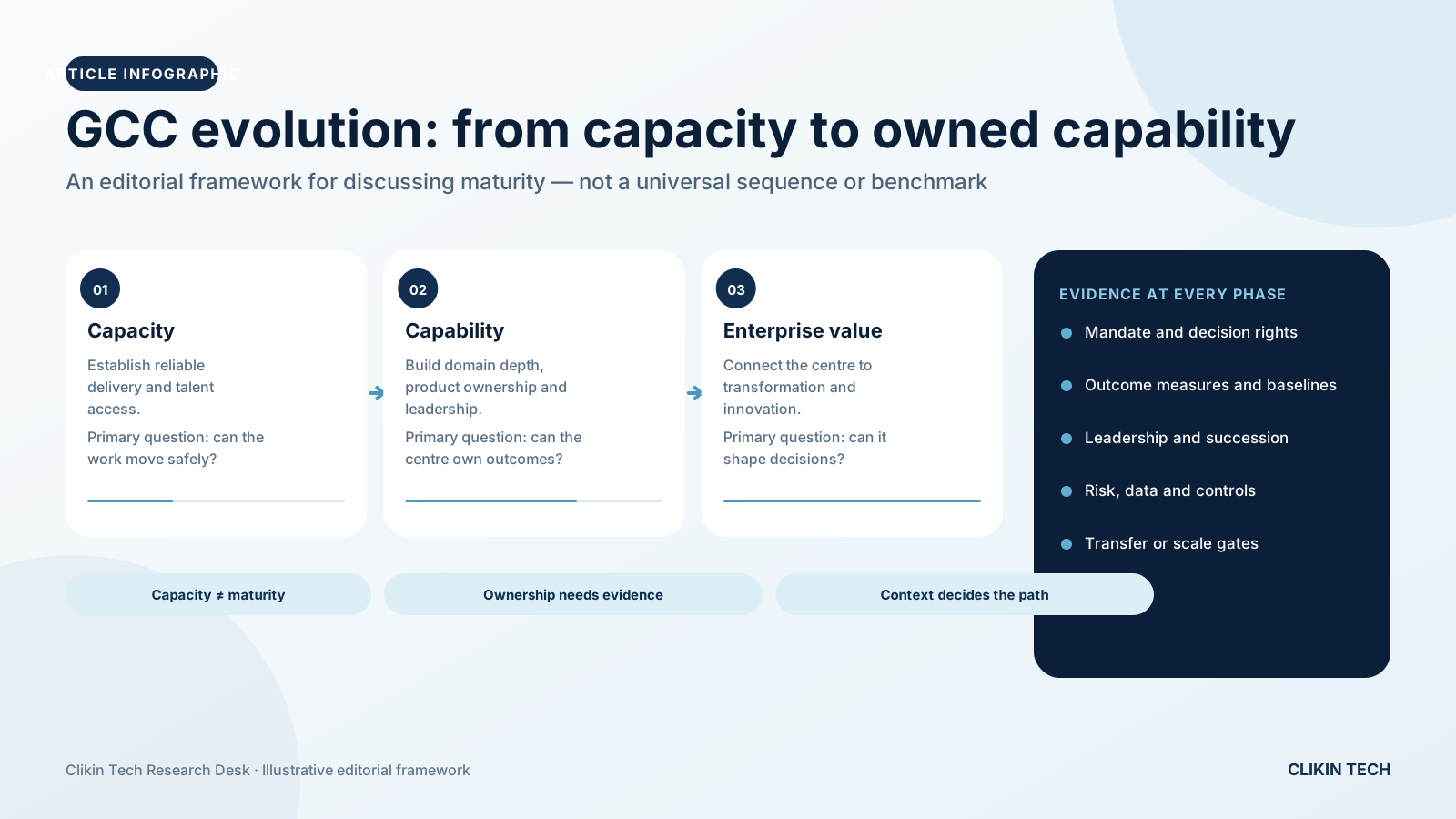
GCC 1.0 — the back office
The earliest GCC mandate often focused on concentrating repeatable support activities in a lower-cost location.
The operating model was judged mainly by labor economics, process adherence and transaction efficiency. That model can still be useful for suitable work, but it is too narrow for many modern capability mandates.
GCC 2.0 — the service hub
The center expands into IT support, testing, shared services, analytics and more complex operational responsibility.
Leadership depth, technology, governance and workforce development become more important because the center is no longer only executing standard tasks.
GCC 3.0 — the capability engine
A mature GCC can own product, engineering, data, AI, research, risk, finance or other strategic capabilities.
The board-level question becomes: which enterprise capabilities should the center own, how will they connect to global teams, and how will success be measured beyond cost?
Five CEO decisions
Define the capability mandate before selecting the city.
Choose an operating and ownership path: direct, BOT, hybrid or an ODC-to-GCC transition.
Design leadership, talent, workplace, technology and governance as one system.
Build transfer and client independence into the model early.
Measure capability, innovation, quality, workforce and business outcomes, not headcount alone.
A practical next step
Start with a capability charter, a preliminary location and size view, an operating-model comparison and the evidence needed for a decision pack.
The ClikinTech GCC Blueprint is designed as a focused entry point for this work.
Apply the framework to your mandate.
Discuss the capability, location, operating model, workforce or evidence you need to validate.
Talk to Clikin Tech